THEMATIC CATALOGUE OF EGYPTOLOGY BOOK FILES

Dear friends, along these ten years (from the beginning of my project - September 2011), due your kind attention to my library collection my site received more than three millions of visits! That is your best acknowledgement for my work to be valuable and useful for all of you! These more than two millions of visits here are the best proof for that.
This is the complete thematic catalogue of shared on my site egyptology book files - at the moment there are around 6000 title entries (sometimes a lot of them included in one separate publication - as a multi volume series). This catalogue will be ever actualized to be up to date with the newest additions to my book file collection. I will accurately renew the summary and add the new published books to it be ever full and actual according the site publications.
So, check regularly this site page and subsidiary sections pages, look for new titles in the list, download the files and enjoy the books!
I hope my book file collection will be usefull for all the people loving Ancient Egypt and will be a well accepted contribution in the popularization of egyptology knowledge!
THEMATIC CATALOGUE OF EGYPTOLOGY BOOK FILES
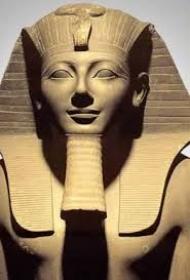
This division of my book-files Thematic catalogue contains works concerning Ancient Egyptian History, Chronology, Archaeology and Civilisation in general. Here are the most important events and processes in the ages of pharaohs, chronological sequence and dating of them. Presented are general works on ancient monuments and remarcable archaeological sites. A lot of important analyses snape a widespread painting of complicated, multi-leveled Egyptian society and it's achievements for more than three millenia as the oldest and most long lived national state in the world history.
ANCIENT EGYPT: GENERAL STUDIES
2. Ancient Egyptian Chronology.
3. Archaeology of Ancient Egypt.
4. Ancient Egyptian Civilisation.
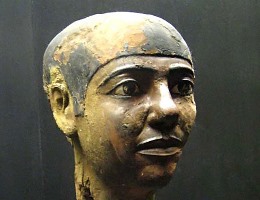
This division of my Thematic Catalogue is focused on the Ancient Egyptian Biographies: not only these of the rulers, but also the non-royal ones. Before our eyes appear images of mighty monarchs: well-known or obscure. The great women of Egypt are so not passed aside witouth attention.
From non royal remarcable persons we have images of great viziers, priests, soldiers or simply ordinary people. To the division is added a section with valuable monographs about Ancient Egypt royal dynasties, titles of the pharaohs and the regalia: crowns, thrones, etc.
ANCIENT EGYPT IN BIOGRAPHICAL PORTRAITS & ESSAYS
1. General biographic studies.
2.1. Biographies of the pharaohs.
2.2. Hatshepsut: The Female Pharaoh
2.3 Thutmose III
2.3. Tutankhamen
2.5. Cleopatra - the last ruler of Egypt
4. Ancient Egyptian biographic literary genre
5. Pharaonic dynasties, genealogy, titles and regalia.
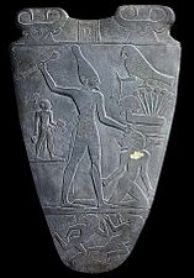
This section of my book files Thematic catalogue is focused on Predynastic (before the united state formation) - with important local prehistoric cultures and Early Dynastic (dynasties I-III) Ancient Egypt. In this topic Society and Politics, Economics and External Relations, Archaeology and Art, Culture in general are included. Presented are important researching fields as the country unification process, long distance trade and cultural relations and first stages of hieroglyphic writing system.
PREDYNASTIC AND EARLY DYNASTIC EGYPT
2. Economics & external relations
3.1. Archaeology and art
3.2. Predynastic and Early Dynastic Cemeteries
3.3. Early Dynastic Royal Tombs
4. Culture
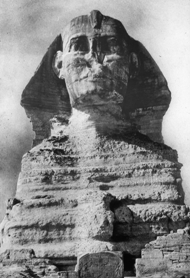
This section of my book files Thematic catalogue is focused on the Old Kindgom (IV-VI/or VII dynasties: circa 2686-2181 BCE) and First Intermediate Period (VII/or VIII- part of IX dynasties: circa 2181-2055 BCE) in Ancient Egypt. The different sections deal with history & society, government & administration, archaeology, architecture, art, literature & language, religion. Special attention is paid to the remarcable monuments from this epoch: great pyramids, great Sphinx, other monuments in Giza, Saqqara, Memphis, Abusir, Dahshur etc. This age is the dawn of Egyptian literature too, with the Pyramid texts.
OLD KINGDOM STUDIES
I. History and society
2. Government and administration
II. Archaeology
1. Archaeology, architecture and art
2. Giza:
2.1. The Great Pyramids
2.2. The Great Sphinx
2.3. The Tombs in Private Necropolis at Giza
3.1. Saqqara during the Old Kingdom: Pyramids and royal tombs
3.2. Saqqara during the Old Kingdom: Private necropolis
4. Abusir
5. Dahshur
III. Culture:
1.2. Pyramid Texts
2. Religion
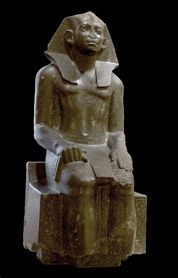
This is the Middle Kingdom division of my Thematic book-files catalogue. It's focused on pharaonic history from the middle of IXth dynasty up the late XIII dynasty (approx. 2040- 1700/1650 BCE), and so including the Second Intermediate Period of the Hyksos invasion (1700/1650-1550 BCE).
This period is so remarcable with monumental architecture in Lisht, wonderful tombs in Beni Hassan and other places. In this age literature so flourished with Coffin Texts, fairy tales and authobiographies, first scientific papyri and codification of the classic hieroglyphic Egyptian language: Middle Egyptian.
MIDDLE KINGDOM STUDIES
2. Government and administration
3. Society
4. Second intermediate period and the Hyksos
II. Material & Written Culture:
3.1. Architecture
3.2. Middle Kingdom Cemeteries
3.3. Lisht & El-Saf
3.4. Beni Hassan
4.2. Coffin Texts
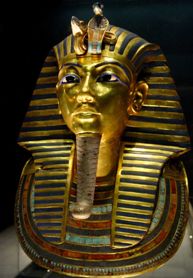
This New Kingdom Studies division of my egyptology book-files catalogue is dedicated to the most shining and powerful Ancient Egyptian state ever existed. The historical period between ca. 1550 and 1077 BCE presents a chain of victorious conquests, colossal buildings, wonderful tomb paintings and mysterious tomb treasuries. That is time of great warlords Thutmose III, Sety I, Ramesses II, Ramesses III and Merneptah, female pharaoh Hatshepsut and master of diplomacy Amenhotep III. That is the age of Amarna turmoil and cursed heretic Akhenaten, his beutiful wife Nefertity and boy-king Tutankhamen. In Late Bronze Age world Egypt met the mighty Hittites and pushed back the wave of Sea Peoples. In literature appeared the Book of the Dead.
NEW KINGDOM STUDIES
I. XVIII-th dynasty
1.1. Political History
1.2. Hatshepsut: The Female Pharaoh
1.3. Thutmose III
2. Society
II. Amarna Age
3. Tutankhamen
II. Ramesside Period:
1.1. Ramesside Political History
1.2. Ramesses The Great
2.1. Ramesside Society
2.2. Deir el Medina
3. Relations with the Hittites
III.Material culture:
2.1. Architecture
2.3. The Theban archaeological complex
2.3.1. Thebes in general
2.3.2. Karnak
2.3.3. Luxor
2.3.4. Medinet Habu
2.3.5. Deir El Bahri
2.3.6. Valley of the Kings and Valley of the Queens
2.3.7. Private tombs in the Theban Necropolis
2.3.8. Gourna
IV. Written culture
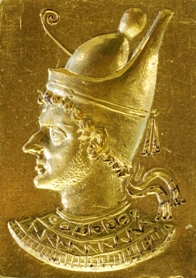
The decline of Ancient Egypt had been so long and illustrious as it's history as whole. That is an era from more than thousand years, including Third Intermediate period (ca. 1069-664 BCE), Late Period (ca. 664-332 BCE), Hellenistic period (332-30 BCE) and epoch of Roman rule until the division of Roman empire as a birth of the Byzantine one (30 BCE-395 ACE). That is a chain of foreign conquerors: Libyans, Nubians, Assyrians, Persians, Greeks and Romans. But that is an era of struggle for national independence and lastt attempts to keep Egyptian authority in it's former empire in Levant. That is a deep transformation in which this ancient nation accepted to be ruled by foreigners, but overcomed them by it's high culture. The syncretic hellenism gave birth to the phaenomen of Alexandria. Some of the most impressive and well preserved temples and other monuments are built, and the demotic script and coptic alphabet are invented.
DECLINE AND SUNSET OF ANCIENT EGYPT: LAST NATIVE PHARAOHS AND FOREIGN CONQUESTS
I. Third Intermediate Period & Late Kingdom :
2.1. Archaeology and architecture
2.2. Third Intermediate period and Late Kingdom Cemeteries
III.1. Persian conquest and rule
III.2 Elephantinae Papyri
IV.1. Hellenic Egypt - Politics & Society
2. Political history of the Ptolemaic time
3. Ptolemaic Egypt : society and everyday life
4. Cleopatra - the last ruler of Egypt
IV.2. Hellenic Egypt - Culture & Civilisation
5. Hellenic Egypt: architecture.
6. Hellenic Egypt: archaeology and art.
7.1. Hellenic Egypt: culture & civilisation
7.2. Hellenic Egypt: Literature
9. Hellenisation & international spreading of Egyptian cults
V. Roman Egypt
2.2. Literature of Roman Egypt
3.1. Archaeology of Roman Egypt
3.2. Mummy portraits
VI. Final phases in development of Egyptian Language and Writing
1. Late Egyptian and Demotic Writing
2. Coptic language and Literature
VII. Hellenistic and Romanized art
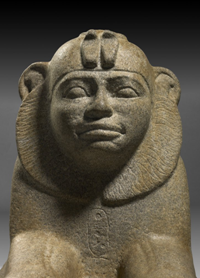
From the same distant past Egyptian culture, despite it's relative isolation developed in closest connections with it's neighbors. On the caravan routes or under ship's sails traveled humans, goods and ideas. Pharaonic armies many times conquered the nearby countries, but sometimes are defeated and conquered by them too. Happened and that, the conquerors to be proclaimed as liberators. Finally in each event or process of interaction the vorldwiew scope of the native habitants of Pharaonic land become more and more vide and complex.
The most important of these connections are these with Nubians in the South, with Asiatics in Levant and with Greeks and other maritime peoples trough the Mediterranean Sea. The ties with Asia Minor, Mesopotamia, Punt, Persia, far away India and ancient Hebrews in concrete historical periods don't must be ignored too.
THE NEIGHBORS OF EGYPT
I. Nubian (Kushite) studies
1.1. The Nubian Past
2.2. Remarcable Monuments in Second Cataract area & Lower Nubia
2.3. El-Kuru, Nuri, Meroe, Gebel Barkal
3.1. The Nubian Culture
3.2. Nubian inscriptions
III. Egypt and the Levant/ Eastern Mediterranean
1.1. Ancient Egypt and Levant before New Kingdom empire
1.2. Ancient Egypt and Levant in the New Kingdom age and after
1.3. Second intermediate period and the Hyksos
2.2. Elephantinae Papyri
3.2. Sea Peoples invasion
3.3. Hellenic conquest of Egypt
4.1. Egypt and Asia Minor
4.2. Relations with the Hittites
5.1. Egypt and Mesopotamia and beyond
5.2. Assyrian invasion
5.3. Persian conquest and rule
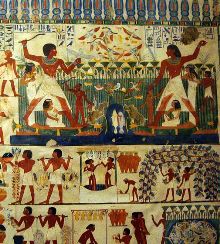
The popular image of Anciet Egyptian society is that of a pyramid, on which top is the pharaoh, under him the administation, priesthood, military commanders and on the bottom is presented the ordinary people. This picture is in general correct, but heavy simplified. The Ancient Egypt had been a civilisation with full flesh and blood, a society consisting of living and life-loving individuals with wishes and dreams similiar to our own. Our knowledge about this society cannot be precise and detailed wihout understanding of such different and important aspects as wars and warfere, economics, trade, urban and village communities, law and social order. The private aspects as everyday life, the family and gender roles, household activities and entertainment must be not neglected in any case.
ANCIENT EGYPTIAN SOCIETY AND SOCIAL ACTIVITIES
I. Social structure
3. Ancient Egyptian Administration
4. Local Elites and Centres of Power
II. Public Aspects
1. Ancient Egypt at War
1.1. The Military class
1.2. War as an art and a lifestyle
1.3. Weapons & armoury
1.4. Ancient Egyptian fortifications
2.1. Economics
2.3. Deir el Medina
3.1. Trade
3.2. Ancient Egyptian Towns and Cities
3.3. Alexandria Phaenomen
III. Private aspects
1. Family and gender studies
2. Relation toward the foreigners- an evolution
3.1. Everyday life
3.2. Entertainment in Ancient Egypt
4. Daily use objects
4.1. Metallurgy & related crafts
4.2. Pottery & glass
4.3. Textiles & clothing, shoes & leatherwork
4.4. Woodworking and furniture production
4.5. Food and fragrance processing
4.6. Bijoux & daily use objects
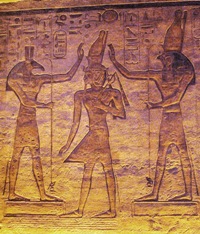
Here we will meet Egyptian gods and goddesses, will investigate the role of the cult and magic in Egyptian society and in the life of it's separate members, will understand the causes why the priesthood there was so mighty and autoritathive. We will see the astonishing Egyptian temples: from Theban sacred complex to Dendara and Edfu. Will watch in our imagination the magnificent ancient rituals and feasts, abandoned from a long time ago. Special attention is paid to the imaginations of the netherworld and afterlife, Ancient Egyptian funerary culture and ancestors worship, to the rich equipment buried with the mummies of deceased and to themselves. The multiple religious books of this civilisation are too not neglected.
ANCIENT EGYPTIAN RELIGION
I. Complex studies & specific aspects
II. For gods and goddesses
1. For gods and goddesses in general
5. Hellenisation & international spreading of Egyptian cults
III. Cult and Magic
2.2. Karnak
2.3. Luxor
2.4. Medinet Habu
2.5. Deir El Bahri
2.6. Dendera
2.7. Edfu
2.8. Esna
9. Royal cult in Ancient Egypt
10.1. Ancient Egyptian Magic
10.2. Amulets, Scarabs & Seals
IV. Funerary Culture
1. Funerary culture, rituals and ancestor worship
2. Souls and spirits, netherworld
V. Ancient Egyptian Funerary Architecture
1. Funerary archaeology in general
2. Royal tomb architecture
2.1.1. Ancient Egyptian Pyramids
2.1.2. The Great Pyramids
2.1.3. Saqqara during the Old Kingdom: Pyramids and royal tombs
2.1.4. Dahshur
2.2.1. Different royal tombs
2.2.2. Early Dynastic Royal Tombs
2.2.3. Valley of the Kings and Valley of the Queens
3. Private tomb architecture
3.1. Predynastic and Early Dynastic Cemeteries
3.2.1. Old Kingdom Cemeteries
3.2.2. Saqqara during the Old Kingdom: Private Necropolis
3.2.3. The Tombs in Private Necropolis at Giza
3.2.4. Abusir
3.3.1. Middle Kingdom Cemeteries
3.3.2. Beni Hassan
3.3.3. Lisht
3.4.1. New Kingdom Cemeteries
3.4.2. Private tombs in the Theban Necropolis
3.4.3. Gourna
3.5. Third Intermediate Period and Late Kingdom cemeteries
3.6. Ptolemaic and Roman age cemeteries
V. Ancient Egyptian Funerary Equipment
4. Canopi, Shabtis, Statuettes & Models
VI. Ancient Egyptian religious literature
3. Coffin Texts
5. Other mythological/religious books
VII. Specific aspects of Ancient Egyptian Religion
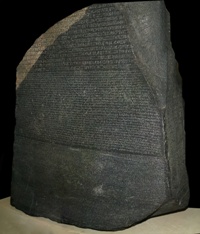
Ancient Egyptian language is not just an afro-asiatic one. This is an living and acting civilisation tool with one of the oldest original script systems. The Egyptian hieroglyphs are unique not only a breach in information fixing and spreading, but so because this is a kind of art: with the high-style images, remained unchanged trough millenia.
Here are presented the Ancient Egyptian language in it's evolution: from archaic forms trough the most famous form of classic Middle Egyptian, New and Late Egyptian to Coptic, still living in Egypt. The hieroglyphic script, hieratic and demotic scripts are analysed in details. Pointed is the influence of Egyptian script for invention of the first alphabet - the Proto Sinaitic.
The enthusiasts will find all what is needed for studying this wonderful language: grammars, hieroglyphic courses, authoritative dictionaries, chrestomaties and a great multitude of original texts. Monographs on separate linguistic aspects and a section about onomastics, titles and toponyms are included too.
ANCIENT EGYPTIAN LANGUAGE AND WRITING
I. General studies on Ancient Egyptian Language
II : Classic Hieroglyphic - Middle Egyptian
1. Grammars
3. Dictionaries
5. Original hieroglyphic texts:
5.2. Decorative inscriptions & ostraca
5.3. Texts on papyri
III: Evolution of Ancient Egyptian Language and Writting
2. Late Egyptian and Demotic Writting
3. Coptic language and Literature
4. Egyptian Names, Toponyms, Titles & Epithets
5. Separate Linguistics aspects
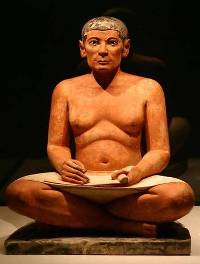
For many people Ancient Egyptian literature is only a corpus of religious books, focused on the afterlife. But nothing could be so far from the truth as this kind of opinion. Yes, the religious books form a large part of Egyptian legacy and everyone is heard about the Book of the Dead, Pyramid or Coffin texts. But the written monuments from the pharaonic age are much more: much more different and much more variable. There are historical texts (chronicles and biographies), wonderful wisdom literature corpus, inspired other many peoples in the Ancient Near East, exciting travel stories, fairy tales, letters and many other genres. That one from the most well preserved ancient literatures in the world.
ANCIENT EGYPTIAN LITERATURE
II: Different Genres
2. Biographies
3. Sapiental (didactic, instructional) literature
7. Non fantastic stories (smart people, etc.), humour
8.1. Miscelaneous letters
8.2. Amarna letters
III. Papyri manuscripts
1. Papyri manuscripts: General Studies
2. Papyri manuscripts from Pharaonic Age
3. Papyri manuscripts from Hellenistic and Roman age
IV. Epigraphics
1. General & miscelaneous studies on Egyptian Epigraphics
2.1. Pharaonic monumental inscriptions
2.2. Ptolemaic and Roman Age monumental inscriptions
3. Inscriptions on steles and stones
4. Decorative inscriptions and tabulae
V. Religious literature
3. Coffin Texts
5. Other mythological/religious books
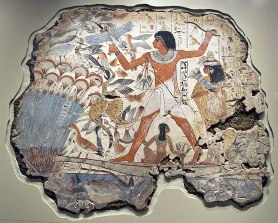
Ancient Egyptian art is one from the most fascinating aspects of this great civilisation. It is specific, with it's own style, reflected the shining isolation of the country between deserts and seas. Differend kinds of art are developped to perfection there for millenia: sculpture and reliefs, painting and jewelry, glassware and embroidery and many others. The museum collections in Egypt and all around the world make these treasures accessible to everyone and spread the legacy of this wonderful culture.
ANCIENT EGYPTIAN ART
I. General and miscelaneous studies
II. Different arts
1.1. Ancient Egyptian Sculpture
1.2. The Great Sphinx
3. Ancient Egyptian Paintings & Drawings
10. Canopi, Shabtis, Funerary Statuettes & Models
III.1. Egyptian art trough the ages
III.2. Hellenistic and Romanized art
III.2A Mummy portraits
V. Egyptian art in museum collections
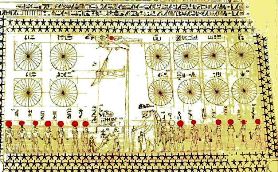
ANCIENT EGYPTIAN SCIENCE & TECHNOLOGIES
I. Ancient Egyptian Science
2. Mathematics, physics & astronomy
3. Biology, zoology & botanics
II. Ancient Egyptian Technologies
1. General and miscelaneous studies
3. Metallurgy & related crafts
5. Textiles & clothing, shoes & leatherwork
6. Shipbuilding
7. Woodworking and furniture production
8. Food and fragrance processing
10. Weapons, armoury and fortifications
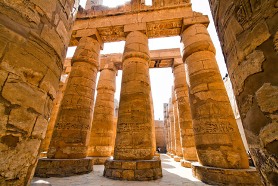
Probably the most astonishing aspect of Ancient Egyptian Civilisation are the gigantic stone buildings - a true miracle in architecture. Despite deep antiquity and honest technological level, they serve as an absolute proof of capability what owned Ancient Egyptian society and for deep authority, what obtained the ruling class over the lower social strata. But these splendid archaeological objects could not be completed withouth sofisticated knowledge of ancient architects, mathematicians, administrators drawing the right direction for these unvelievable hudge efforts of a whole culture. Due their honest service, our world can enjoy with deep respect to the piramids, temples, ornamented tombs and other monuments in different parts of this country.
ANCIENT EGYPTIAN ARCHITECTURE & REMARKABLE MONUMENTS
I. Ancient Egyptian Architecture: Basic Works
2.1. Ancient Egyptian Pyramids
2.2. The Great Pyramids
3. Ancient Egyptian Temples (in general)
4.1. Ancient Egyptian Tombs (in general)
4.3. Predynastic and Early Dynastic Cemeteries
4.5. Middle Kingdom Cemeteries
4.7. Third Intermediate Period and Late Kingdom cemeteries
4.8. Ptolemaic and Roman age cemeteries
5. Ancient Egyptian fortifications
II. Remarcable Monuments
1. Giza
1.1. The Great Pyramids
1.2. The Great Sphinx.
1.3. The Tombs in Private Necropolis at Giza
1.4. Giza after the Old Kingdom
2. Saqqara
2.1.1. Saqqara during the Old Kingdom: Pyramids and royal tombs
2.1.2. Saqqara during the Old Kingdom: Private necropolis
2.2. Saqqara before and after the Old Kingdom
3. Memphis
4. Abusir
5. Dahshur
7. Naga ed Deir
8. Abydos
9. Dendera
10. Heracleopolis/ Hermopolis area (Asyut/ Minya)
11. Beni Hassan
12. Naqada & Armant
14. Esna & El Kab
15. Edfu area
16. Aswan area
17.1. The Nile Delta
17.2. Tanis
19. Eastern Desert
20. Sinai and Levant
21. Second Cataract area & Nubia
22. El-Kuru, Nuri, Meroe, Gebel Barkal
23. Theban Archaeological Complex:
23.1. Thebes in general
23.2. Karnak
23.3. Luxor
23.4. Medinet Habu
23.5. Deir El Bahri
23.6. Valley of the Kings and Valley of the Queens
23.7. Private tombs in the Theban Necropolis
23.8. Deir el Medina
23.9. Gourna
23.10. Thebes before and after the New Kingdom
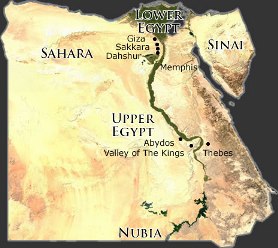
From the same beginning of history and ever before, Egypt had been, is and will be a gift of the Nile. The egyptians obtained full understanding for thsi fact and trough all periods of their history they percepted a worldview imaging their lad as unique, separated from all world around and simultaneously it's geographic, cultural and mythical center. The Nile valley is surrounded by deadly deserts and seas and had natural borders serving as invincible strongholds - hard to be passed from each side. Altough, egyptians proved themselves as glorious conquerors and brave sailors, collecting taxes and gifts, goods and ideas from the whole region beyond their own land.
The second imanent division of Egyptian world is that between Lower Egypt: the large marches of the Nile Delta and Upper Egypt: the long and narrow valley between Delta and cataracts area. These two regions have ultimately different ecology and economy and not in vain the egyptians thought their country as Two Lands.
ANCIENT EGYPTIAN GEOGRAPHY
I. Geography of Egypt
1. Geography of Egypt in General
II. Geography of the outside world
1. Outside world according Egyptians
III. Itineraries
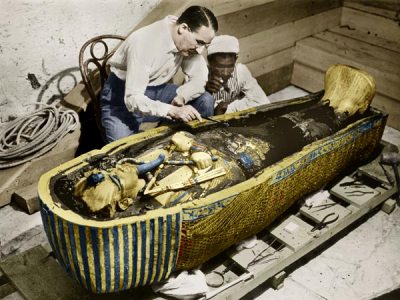
The egyptology is one of most inspiring and astonishing kinds of science. This discipline is forming for alredy almost three centuries on the basis of wonderful combination of archaeology, anthropology, sociology, history and related disciplines.There are a chain of admirable adventures in "Indiana Jones" style, but so slow, detailed and monotonous catalogizing of artifacts and accumulating of the data. The excavations in general seem to the archaic efforts of pharaonic wokrers, but once the artifacts are unburied from the soil, in their analysis take part the ultimate technologies and most advanced engineering devices.
The specific branch of this understanding of Ancient Egypt is to know the ways of transition of this old culture through millenia to influence our modern society. Exotic and on the border between science and speculation is the stream "Black Africa", seeking for traces of connection between Egypt and the heartland of the continent. For regret, the shining of Egyptian civilisation many times brings alot of sick fantasies and false ideas in the imagination of unstable minds. This kind of pseudo scientific hypotheses must be studied too from the egyptologists, because one of their duties is to bust the rumours and to give honest and proved science to the wide public interested from this topic.
THE EGYPTOLOGY SCIENCE
I. Investigations section
2. Biographies
3. Itineraries
4. Modern egyptology & museology
II. Miscelaneous section
1. Encyclopedias, dictionaries, atlases
2.1. Essay volumes
2.2. Honor volumes
4. "Black Africa" stream in egyptology
6. Pseudo (non) scientific & controversial works in egyptology field


Коментари
Публикуване на коментар